
Artist Socials
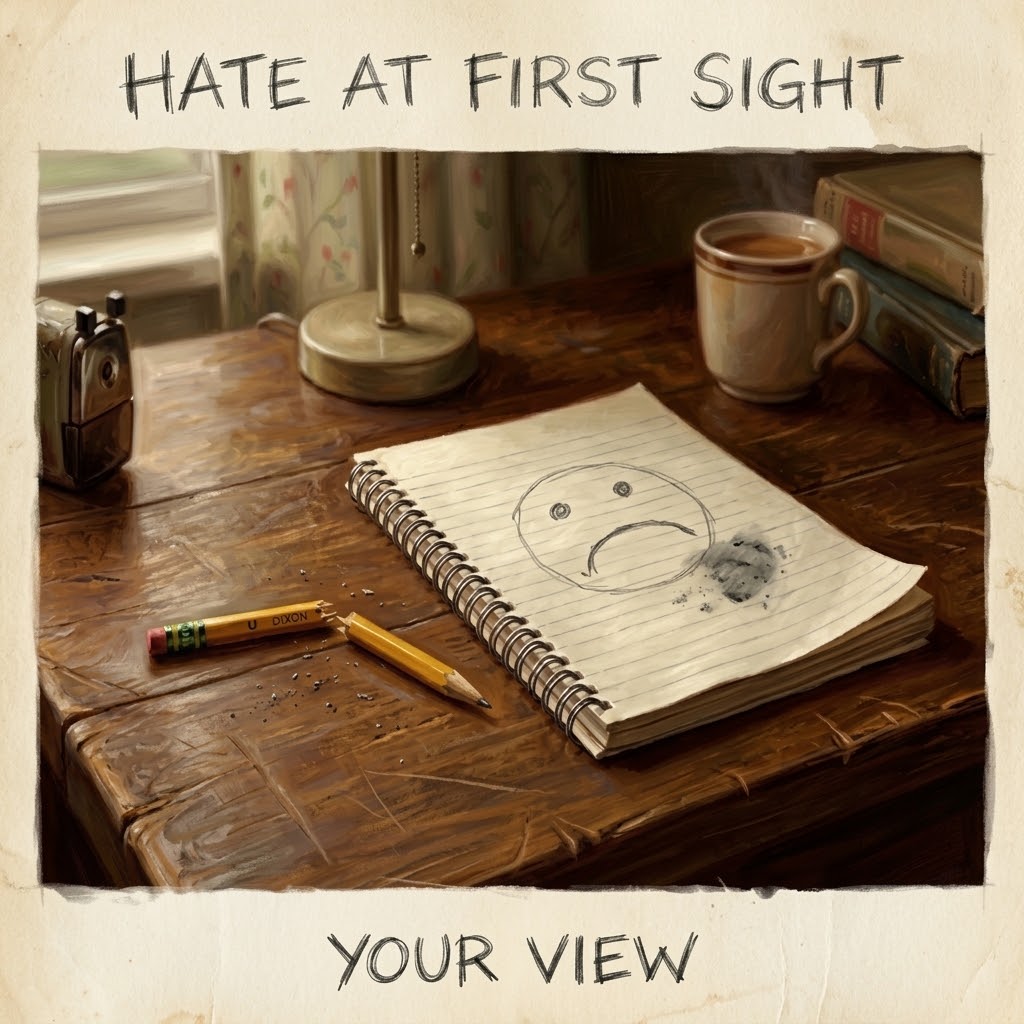
People rarely see each other without bringing their own assumptions into the picture. In “Your View,” Hate At First Sight examines what happens when another person’s perception becomes a substitute for understanding, creating a divide between the identity someone assigns you and the person you know yourself to be. The single brings this subject into a sound that draws from alternative rock, industrial music, and post punk, giving its central idea both force and atmosphere.
The music avoids the limitations of a conventional rock arrangement by drawing on contrasting textures. Aggressive guitar work supplies the track’s immediate impact, while prominent bass lines and eighties inspired synth elements bring a darker electronic dimension. There is a distinct tension between the physicality of the guitars and the colder character of the electronic sounds. Post punk influences add to that friction, giving the music an edge that feels less concerned with straightforward heaviness than with creating a distinctive sonic identity.
This approach also complements the subject matter. Being misread by someone is frustrating enough, but the experience becomes more complicated when their interpretation leaves no room for your own perspective. Assumptions can harden into judgments, making honest communication difficult even when both people believe they understand the situation. “Your View” draws its significance from that uncomfortable gap, where confidence in one’s interpretation does not necessarily make it accurate.
Hate At First Sight’s strength lies in bringing these ideas together without sacrificing the immediacy of the music. The combination of heavy guitars, bass driven momentum, and electronic atmosphere gives the single a character that reaches beyond familiar alternative rock conventions. Its influences are recognizable, but they serve a broader sound rather than defining it outright. Meanwhile, the subject offers more than a simple complaint about being misunderstood. It raises a question about how readily people mistake their own perspective for someone else’s truth. “Your View” leaves that contradiction unresolved, making the distance between perception and reality its most compelling territory.
